How hospital management software improves healthcare operations
Nowadays, hospital management software plays a significant role in the healthcare sector, as it enables clinics and hospitals to operate efficiently. It increases the organizations' productivity and provides high-quality patient care while minimizing administrative efforts. Hospital management software also includes Electronic Health Record (EHR) and Electronic Medical Record (EMR) systems connected to the internet. This article discusses the main aspects of hospital management software.
Hospital management software overview
Hospital management software is used to track and organize the daily operations in hospitals and healthcare facilities. It helps register patients, record their personal information, schedule appointments, and store medical records. Most healthcare facilities use medical practice EHR systems to ensure the safekeeping of patient information. Healthcare providers should be aware of four key points when considering hospital management software: overview, features, integration, and benefits.
1. Overview
The software makes the patient experience seamless and helps the hospital's administrative team operate smoothly. The key objective of this application is to make healthcare management easy and efficient in order to offer high-quality services to people.
2. Features
This software's main features include patient information management, appointment scheduling, billing, laboratory, pharmacy, and reporting. It can be applied in different settings, such as medical practices, clinics, and small and large hospitals. Hospital management software enables healthcare professionals to work systematically and get access to patient information safely and securely.
3. Integration
Hospital management software can be integrated with health information management and medical practice EHR systems to ensure patient information management. The software helps provide safe and reliable solutions to manage data in medical facilities, offering organizations a wide range of integrated functions that help improve their performance in providing healthcare services.
4. Benefits
Hospital management software benefits medical facilities by helping them offer high-quality patient care and excellent organization. The software assists hospitals in managing their resources and processes to provide affordable, high-quality services to people.

Key features to look for in hospital management software
Healthcare providers should look for the following features when choosing hospital management software:
Appointment management
The software should have the ability to allow patients to make appointments from their end. It should also offer automated reminders to avoid missed appointments.
Billing and payment management
This feature helps reduce the chances of errors in billing and makes the tracking process easier. It also ensures patients make payments on time.
Pharmacy and laboratory management
They ensure the hospital's inventory is managed efficiently and that laboratory reports are safe and organized.
Reporting and analytics
This application offers insight into the revenue and performance of the hospital through reports.
Better patient record management
Medical billing software and healthcare management systems offer the digital storage of patient records. Doctors or medical workers can access this information from anywhere at any time, minimizing the use of paperwork and making the process efficient and systematic.
Improved medical billing
Medical billing software automates the medical billing process, removing the chances of human or coding errors. Electronic claims are accurately prepared and sent out to insurance companies for approvals and reimbursements, allowing medical practices to automate invoicing and claim tracking while generating financial reports.
Key points:
- Electronic claims are accurately prepared and sent out for approvals.
- Approvals and reimbursements are processed faster.
- Invoicing is automatically generated.
- Claim tracking and financial reports are easily prepared.
- Revenue cycle management is easier.
- The payment collection process is efficient and convenient.
Efficient staff management

Healthcare software helps manage staff effectively and efficiently.
Better communication
Healthcare professionals in different departments can communicate with each other through the software, making the exchange of information efficient and accurate.
Health information management
Health information management in hospital management software relies on the maintenance of accurate patient records and the exchange of information. Hospital management software synchronizes the processes in health information management systems with EHR systems to ensure the proper flow of information.
Benefits of health information management
- Having accurate patient records.
- Better communication within the organization and between healthcare professionals.
- Faster treatment process.
- Minimized data entry.
- Improved healthcare compliance.
Medical practice EHR and EMR
Medical practice EHR (electronic health record) and EMR (electronic medical record) systems are digital health information management systems used by medical professionals in their practice. These records are important because they help doctors and medical workers manage patients in an efficient and organized manner, including:
- Patient's health history.
- Prescription records.
- Lab reports.

Diagnosis and treatment
EMR focuses on a patient's medical history recorded within a clinic or hospital, while EHR is an electronic health record that can be shared across different institutions within a network. Medical practice EHR and EMR systems improve healthcare by ensuring doctors and nurses have access to patients' electronic records, minimizing handwritten paperwork and reducing medical errors, and improving healthcare workflow overall.
Key points
- EMR manages and maintains electronic records within a particular clinic or hospital.
- EHR securely shares the health information of a patient between different institutions.
- Medical professionals have better access to updated and accurate patient health information using EHR and EMR systems.
- These systems minimize the use of paperwork and medical errors.
- Healthcare workflow is improved using EHR and EMR systems.
- They play a significant role in improving the quality of patient care while enhancing effective healthcare services.
Medical practice EHR overview
A medical practice EHR is a digital technology used in modern healthcare to manage patient records. It securely stores patient history, prescriptions, lab reports, and treatment plans, ensuring the patient information is accurate and available.
EMR system functions
Medical practice EHR and EMR systems effectively manage the different departments in a hospital or clinic. EMR systems are primarily used to maintain electronic records of patients, while medical practice EHR is used to share patient health information among different medical professionals in different institutions.
Better patient care
Medical practice EHR helps doctors and medical workers provide better patient care and plays a vital role in improving diagnosis and treatment. Medical billing systems reduce paperwork and minimize medical errors, improving healthcare workflow through better use of time and resources.
Healthcare workflow improvement
Medical practice EHR improves healthcare workflow in several ways, enhancing the quality of patient care and providing better coordination of medical professionals. With a medical practice EHR, healthcare facilities can offer better services.
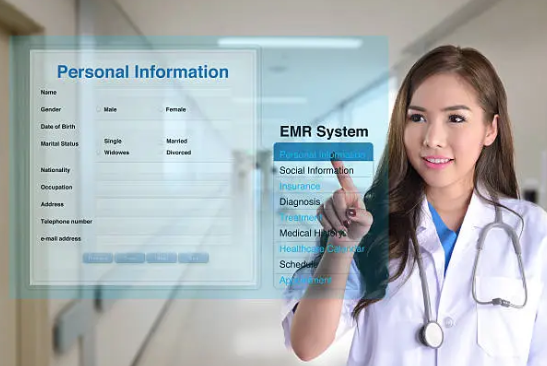
The hospital management software should have a good interface that is easy for doctors and other medical workers to use. The best hospital management software choice enhances the hospital's performance while offering high-quality patient care.
Choosing hospital software
Choosing the best software for a hospital is critical to its efficient operation and growth. The right hospital management software should meet the organization's needs and offer features such as patient records management, appointment scheduling, and billing.
Essential software features
The hospital management software should have a user-friendly interface and essential healthcare features. It should also provide a seamless experience when combined with EHR and other healthcare systems, considering:
- Hospital size.
- Specialty requirements.
- EHR compatibility.
- Data security.
- Customer support.
- Pricing.
- Ease of use.
- Scalability.
Using a free demo or trial is the best way to determine the functionality of the software.
Final thoughts
Choosing the best hospital management software is a wise investment for a healthcare provider, as it helps manage patient records, organize appointment scheduling, and automate the billing process while minimizing errors. With hospital management software, staff can handle their administrative tasks more efficiently, maximizing productivity and improving patient experience. Electronic health records (EHR), medical practice EHR, and health information management systems (HIMS) provide the best performance when they are interoperable. Good hospital management software can help healthcare providers maximize their revenue while giving high-quality patient care.
FAQs
1. What is hospital management software?
Hospital management software is a digital tool used to organize and manage the daily operations of hospitals and healthcare facilities, including patient records, appointments, and billing.
2. How does hospital management software improve healthcare operations?
This system boosts healthcare operations by automating processes, minimizing errors in manual data entry, and improving staff performance.
3. What features should hospital management software include?
Key features include appointment scheduling, billing and payment management, pharmacy and laboratory management, and reporting and analytics.
4. Can hospital management software improve patient experience?
Yes, as it can help provide fast appointment scheduling, patient record access, billing, and communication.
5. How does hospital management software help doctors and staff?
The system helps doctors and staff provide better patient care through improved access to electronic medical records, better appointment organization, and easier management of administrative tasks.
6. Does hospital management software reduce paperwork?
Yes, because it enables electronic storage of patient records, removing the need for paper records.
7. Is hospital management software secure for patient data?
Yes, as it works with data encryption features that ensure a hospital's data is safe.
8. Can hospital management software integrate with other healthcare systems?
Yes, because it operates on interconnected technology platforms.