Electronic Healthcare Record System: What You Need to Know
Technology is now an integral part of almost all healthcare providers, including hospitals, clinics, doctors, nurses, laboratories, and many others. Part of quality healthcare is accurately recording, safely storing, and quickly accessing patient information when required. Information can be challenging to manage in paper records on a large scale, which is the case for a healthcare organization with many patients. EHR systems, or electronic health record systems, are one solution to help create patient records electronically. Modern EHR platforms help healthcare providers to share patient information, enable care coordination, manage clinical documentation, periodically review reports, and optimally coordinate various healthcare services.
What is an electronic healthcare record system?
An electronic healthcare record system electronically generates, stores, maintains, and accesses the health-related information of individuals. Digital records are also easier to search and organize than paper files. This means that healthcare providers can now easily search through a patient's previous information without having to sift through multiple paper documents.
How Does an EHR System Work?
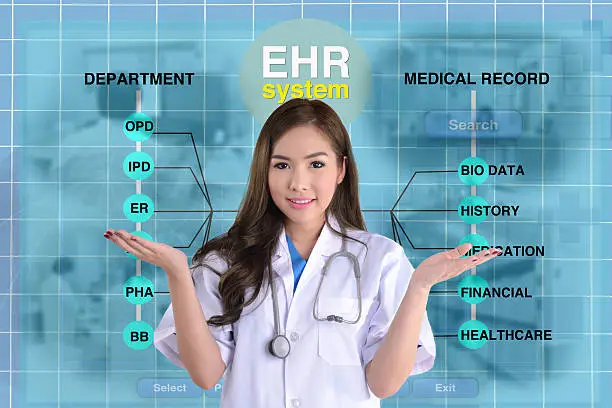
As a rule, the workflow of an EHR system starts with patient registration. The patient walks into a health care facility, and the staff inputs basic data of the patient into the digital system. In any case where there is already a patient, staff will simply have to search for the record and associate the current visit with an available profile. During the examination, the practicing doctor can record all symptoms, observations, and findings from previous exams, as well as diagnosis status, along with medications prescribed and the treatment plan, in digitized form. If laboratory testing is necessary, the system allows management of test requests. This helps in correlating laboratory results and other reports available with the patient record. An authorized healthcare professional is able to go through old information from later visits.
Start With Patient Registration
Typically, an EHR system workflow starts at patient registration. Staff manually key in the patient's name and other vital information directly into the digital system. In the case of existing patients, you can look up old records that tie to your present visit. This can help to easily keep the patient details in one organized digital profile.
Document Clinical Information
When the doctor visits the patient, he can record symptoms, observations, diagnoses, medications, and treatment plan background in the digital record. The test request can be handled through the system if laboratory testing is necessary. Certain laboratory results and other reports can be attached to the patient record. This allows clinical information to be kept together in the patient's digital record.
Review Patient History
In later visits, the history of patients can be reviewed by authorized healthcare professionals. Medical history, clinical notes, and laboratory results can be compared with the available records to ascertain treatment details. It is important to recognize this information for the continuation of a patient's healthcare path. This is how EHR systems embody effortless and regular patient information organization right at your fingertips.
Difference Between EHR and EMR
For related terms, EHR and EMR are often confused with each other; however, they may vary in the world of healthcare technology. An EMR, or Electronic Medical Record, typically refers to the digital version of a patient's medical record at any given healthcare provider or organization. An EHR can be larger in scope, as it may be intended to share and coordinate patient information between multiple providers and settings.
Why Are EHR Systems Important?
Healthcare practitioners rely on accurate and timely patient data. Healthcare workflow can get complicated if information is incomplete, obsolete, or hard to access. A digital space with patient information organized in one place, an EHR system. This allows authorized providers to quickly obtain relevant records and review a patient's previous healthcare history. Also, EHR systems can help healthcare organizations to streamline documentation, communication, care coordination, reporting & administrative workflows.
Key Features of an EHR System
Patient Registration and Profile Management | Digital Medical Records |
|---|---|
Medical History Tracking | Medication Management |
Allergy Documentation | Laboratory Results |
Clinical Notes | Electronic Prescribing |
Appointment Scheduling | Patient Portals |
Billing Integration | Reporting and Analytics |
Security and Access Controls | Interoperability with Other Systems |
Faster Access to Patient Information
Time is of the essence in a health care environment. You are prepared to study the medical reports of a person, while physicians and nurses can quickly recall their medical reviews. EHR is a sensitive and easy-to-use system that allows authorized users quick access to digital records of patients. Staff can pull up a patient's record and see what information is out there. Accessing the portal faster will help health professionals comprehend a patient's's history and take advantage of every visit by contextualizing it to previous information.
Allergy Information
Patient safety and allergy information. Manage Patient Expectations: Healthcare professionals should have available information on known allergies before recommending a treatment or medication. EHR systems allow allergy information to be documented and maintained in their patient profile. Follow established procedures that notify you of known allergies prominently. It is necessary that accurate documentation be available to make this feature work.
Laboratory Results
In addition, laboratory tests are widely employed for diagnosis and monitoring patients. Laboratory requests and results are linked to patient records through EHR systems. Digital records enable doctors to access any test results that were available. Past results are available for healthcare professionals to compare with other changes. The integration of laboratories can help decrease manual paperwork, along with the transfer of reports.
Appointment Management

Interoperability of EHR systems can be as simple as integrating appointment scheduling features with other healthcare technologies. You can also manage your staff's patient appointments, follow-ups, cancellations, and rescheduling. By creating digital appointment calendars, it helps healthcare providers organize available time slots that are available. This can be utilized for displaying automated reminders regarding being present for an appointment.
Benefits of an EHR System
EHR systems can help healthcare providers in many ways. Digital records can improve healthcare workflow and processes if used correctly with accurate data.
This allows for instant access to patient information.
Clinical documentation may become easier.
Medication info can be managed electronically.
Laboratory results are easily reviewed.
Care coordination may improve.
Duplicate paperwork can be reduced.
You may have access to support by way of patient communication.
You might have the option to view reports and analytics.
Improved Communication
In healthcare, patient care usually means multidisciplinary collaboration among professionals. Relevant patient information may be needed by the primary doctor, specialist, nurse, laboratory staff, pharmacist, and other providers. When approved personnel log into the EHR system, it may allow appropriate sharing of information. The care team must be able to coordinate their efforts and help the patient in context with or alongside other doctors, services, health professionals, etc. The more information available, ideally immediate access to seeing what a patient just saw or went through, enables the team to do so as needed.
Better Care Coordination
The patient may require a referral from one healthcare provider to proceed to another. It is critical that you have pertinent medical information on hand in these cases. Properly interoperable EHR systems can 'communicate' between healthcare settings by allowing the exchange of patient health information as appropriate. Depending on system integration and availability of data, better coordination can help reduce duplicate tests, repeated questions, and information gaps.
Security and Privacy
EHR systems store confidential health data, so privacy and security are of utmost importance. You can use security controls such as modern system authentication, role-based access, encryption, audit logs, and backups to ensure monitoring, etc. Health care organizations cannot afford to give employees access to more information than necessary. This also could include, for example, strong passwords, secure devices, up-to-date software, and staff security training.
Reporting and Analytics
Through EHR systems, healthcare organizations can provide data-based reports. Patient visits, diagnoses, medications, laboratory activity, appointments, and other available report data. Management reports serve the purpose of operational planning and performance monitoring. With advanced analytics tools, healthcare organizations can analyze trends and identify workflow problems.
Support for Preventive Care

Preventive care is an important part of healthcare. Tracking vaccinations, screenings, regular checkups, and follow-up services could be useful. Some of the EHR systems are capable of recording preventive care information and providing reminders. This has provided healthcare professionals with cues to identify patients' needs for preventive care.
Key Points
Telehealth services may consider EHR integration.
Through virtual appointments, healthcare providers can access patient records.
Data on patients could be a context set when the patient is seen.
Consultation notes may be included in the electronic record.
EHR systems can provide treatment plans.
Digital records can also store data about follow-up.
It is an integration of EHR with telehealth that facilitates remote healthcare services.
This integration allows telehealth services to be more deeply integrated into clinical workflows.
Reducing Paperwork
Consumes hard copies to keep forms, files, reports, prescriptions, and others. It can create document management and storage problems. Electronic health record (EHR) systems can store vast amounts of documentation and records in a virtual landscape. Less paperwork means healthcare staff can spend less time on admin.
Tips for Successful EHR Implementation
For a hospital or clinic to guarantee that they effectively pull off an EHR implementation, there is a specific method to do it. Staff can be helpful in the implementation process, as doctors and employees have a close, niche understanding of daily workflow.
Electronic Healthcare Record Systems of the Future
Healthcare technology is being continuously developed. The use of artificial intelligence, big data analytics, automation, remote monitoring, and mobile health in EHR systems may increase in the future. AI tools can lend a helping hand in clinical documentation and assist in the analysis of massive volumes of healthcare data. Automate to cut down on those mundane administrative tasks. But whenever we embrace new technologies, we need to take into account privacy and security risks; accuracy; financial resources required to implement the practices or procure technological tools for sustainability; usability or user-friendliness of the new technology; and regulatory compliance requirements.
Conclusion
Health records such as EHRs store clinical and health history, medications sent to a patient, allergies, laboratory results, clinical notes, appointments, prescriptions, and treatment plans. They can also help improve communication and care coordination among healthcare professionals. Features include patient portals, electronic prescribing, laboratory integration and reporting, telehealth support, security controls, and interoperability in modern EHR systems. Implementation is important, but accurate data entry, staff training using the database program, strong security, reliable technical support from the program vendor, and good workflow design are equally as important as well. In the end, electronic healthcare record systems make it easier for healthcare providers to manage patient data. Ideally, properly planned and well-implemented EHR technology potentially serves a valuable function in helping to make modern healthcare systems more organized, interconnected, and data-driven.
Frequently Asked Questions
What Is the Difference Between an EHR and an EMR?
By default, EMR is typically used to refer to the electronic medical record of a provider or organization. The Electronic Health Record (EHR) can help with coordination and transfer of information between different healthcare providers, as EHR features wider patient information.
What is interoperability in the context of EHR?
Interoperability drives the exchange of real-time and meaningful data across varied healthcare platforms. This can facilitate access to the right information for healthcare providers and minimize data entry by eliminating repeats.